Sourcing Work Bags from 1688: Laptop Fit, Weight, Handle Drop and Packing
Work bags have a specific job. They need to carry a laptop and daily essentials, sit comfortably on the shoulder or in the hand, and look tidy in an office. That makes them harder to buy from a photo than a casual tote. The work bag guide from 1688 Bags puts it plainly: a useful sourcing decision checks laptop fit, strap comfort, shape retention, lining, hardware, seller consistency and final landed cost.
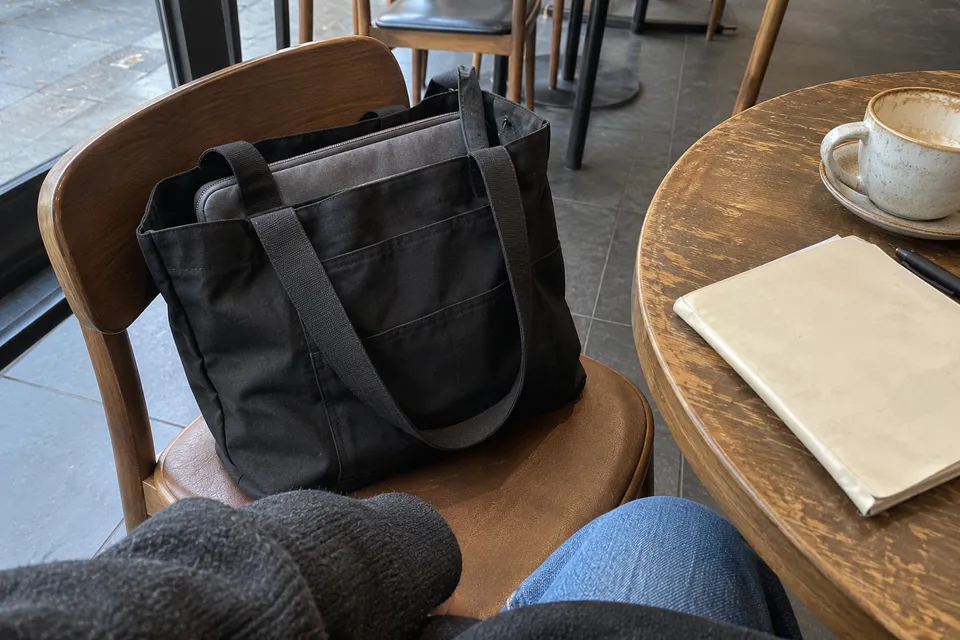
AI illustration of a black work tote on a wooden chair beside a notebook and coffee. Image: 1688bags.com.
Who this guide helps
The site describes three typical buyers: boutiques and resellers building office-friendly women's bag assortments, small teams comparing commuter totes, shoulder bags and laptop-ready daily bags, and buyers who need a polished bag but are not ready for a custom factory project. If you sit in any of those groups, the checks below are a sensible starting point.
Start with the device and its case
The guide begins with the equipment you actually commute with, including its protective case. Measure the device with the case in centimetres. Then request the bag's opening width, internal dimensions and any separate device-compartment dimensions from each seller, and agree a sample insertion and closure check.
The site warns that a laptop size label is not a confirmed fit. Lining, a tapered opening and compartment padding can reduce usable space, and no universal laptop fit is implied by a diagonal measurement. If a seller supplies only exterior dimensions, keep fit marked as unknown. One of the site's hypothetical case examples describes exactly this situation: a nylon work bag comparison where the plan is to switch seller if the laptop compartment size cannot be confirmed.
Empty weight and intended contents
Ask for the selected variant's empty weight, with the weighing unit and a note of which removable parts were included. List the charger, documents and other items you will add when assessing a sample. The guide is careful about what this proves: an empty-weight figure does not establish carrying comfort or a safe load. Record unmeasured weight as unknown, and agree any load test and acceptance rule separately.

AI illustration of a material check on a bag sample. Image: 1688bags.com.
Handle drop and carry clearance
Work bags are often carried over a coat. The guide recommends requesting handle drop measured from the bag opening to the highest inside point of the handle in its carry position, and assessing a sample with your own coat and intended contents if shoulder carry matters. A handle's total length or a model photo does not confirm clearance, comfort or attachment strength. Keep those decisions pending until the agreed evidence is available.
Base, compartments and structure
The site's guide notes that a work bag can look structured online but collapse after packing. It suggests agreeing photos of the empty base, lining, compartment seams and handle attachments, plus the same views with the proposed contents and the closure fastened. Record the observed shape and how easy it is to reach small items.
Visible structure in one sample does not certify load capacity or long-term durability. Resolve any bowing, obstructed closure or inaccessible compartment against your own brief before approval. The site's bag QC inspection page supports this with its general rule that one photographed unit does not establish batch-wide quality.
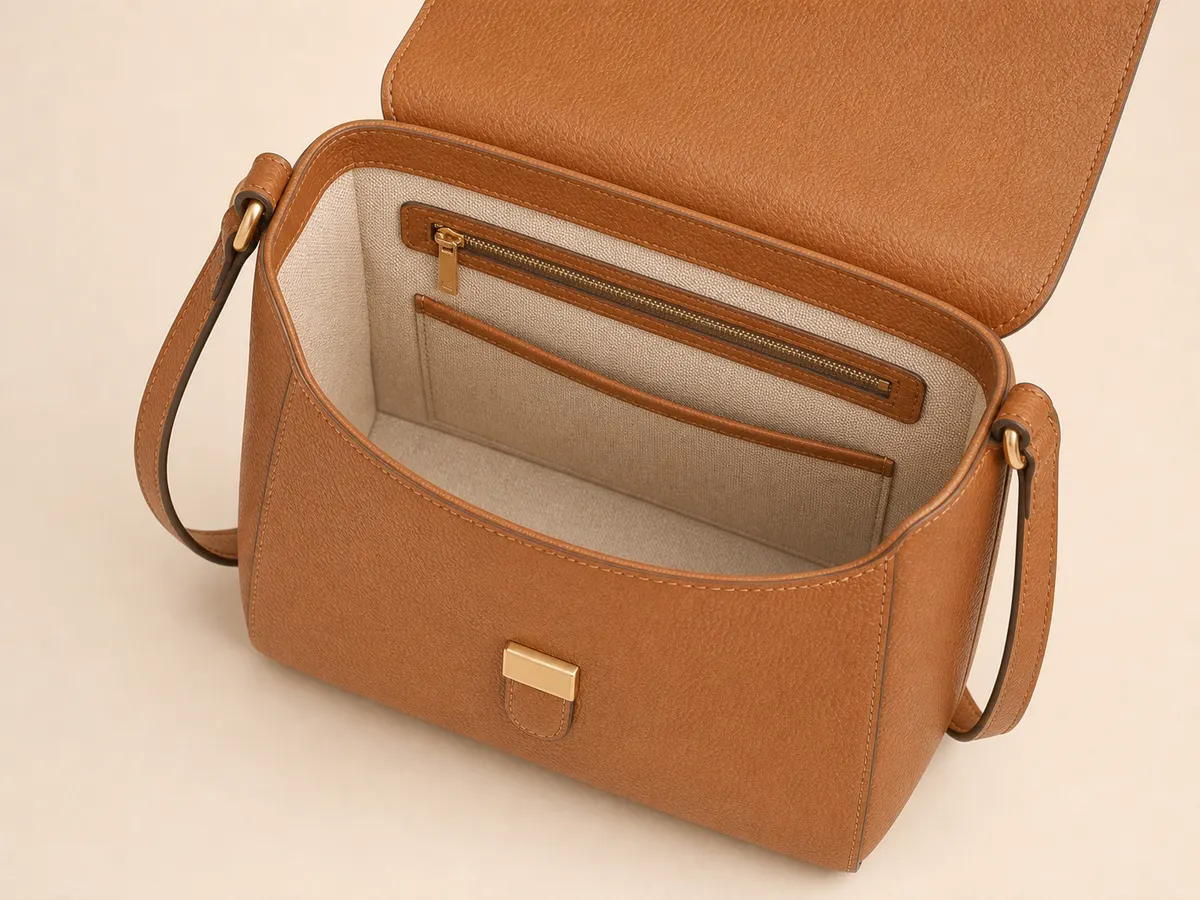
Illustration of the lining view in a bag QC photo set. Image: 1688bags.com.
Keep protection in the cost plan
Work bags often need shape support in transit. The guide suggests agreeing whether the bag needs support and how handles, base and hardware are protected, then obtaining carton dimensions, gross weight and pieces per carton for that packing. Compare the route's actual charging basis, and keep goods, freight and service amounts unknown until they are quoted. A smaller carton is not a reason to remove required protection.
The guide lists what can change the cost: size, structure, lining, a laptop sleeve, handle reinforcement and shipping volume. The site's pricing page adds that delivered cost should keep goods, services, freight and destination charges as separate lines.
A brief the sourcing desk can review
The work bag guide's brief has four parts. First, the target use: laptop carry, office commute, teacher bag, travel work bag or daily tote. Second, size target, laptop or tablet fit, strap preference, structure level and material direction. Third, quantity, destination, deadline, colour split and target landed-cost range. Fourth, whether the agreed inspection should check sample fit, zip function, lining, base, handle attachments or carton packing.
Save the exact listing and variant with that brief, and send the same requirements to every seller you compare. Weak handles or narrow straps reduce daily-use value, so ask about them directly rather than trusting the main photo.
When the order arrives at the warehouse, compare QC photos with the brief rather than with the listing photos. If a compartment, zip or handle differs from what was agreed, the site's QC process allows a hold before export so the issue can be raised with the seller.
FAQ
Does a laptop size label confirm fit?
No. The site recommends measuring your device with its case and requesting opening and internal dimensions.
How should handle drop be measured for a work bag?
From the bag opening to the highest inside point of the handle in its carry position, according to the site's guide.
Can a work bag be packed flat to save freight?
The site advises keeping required protection in the plan; a smaller carton is not a reason to remove it.
Sourcing work bags for your shop? Send the listing and device sizes through the sourcing request page.
Contact 1688 Bags: email sales@1688bags.com · 1688bags.com